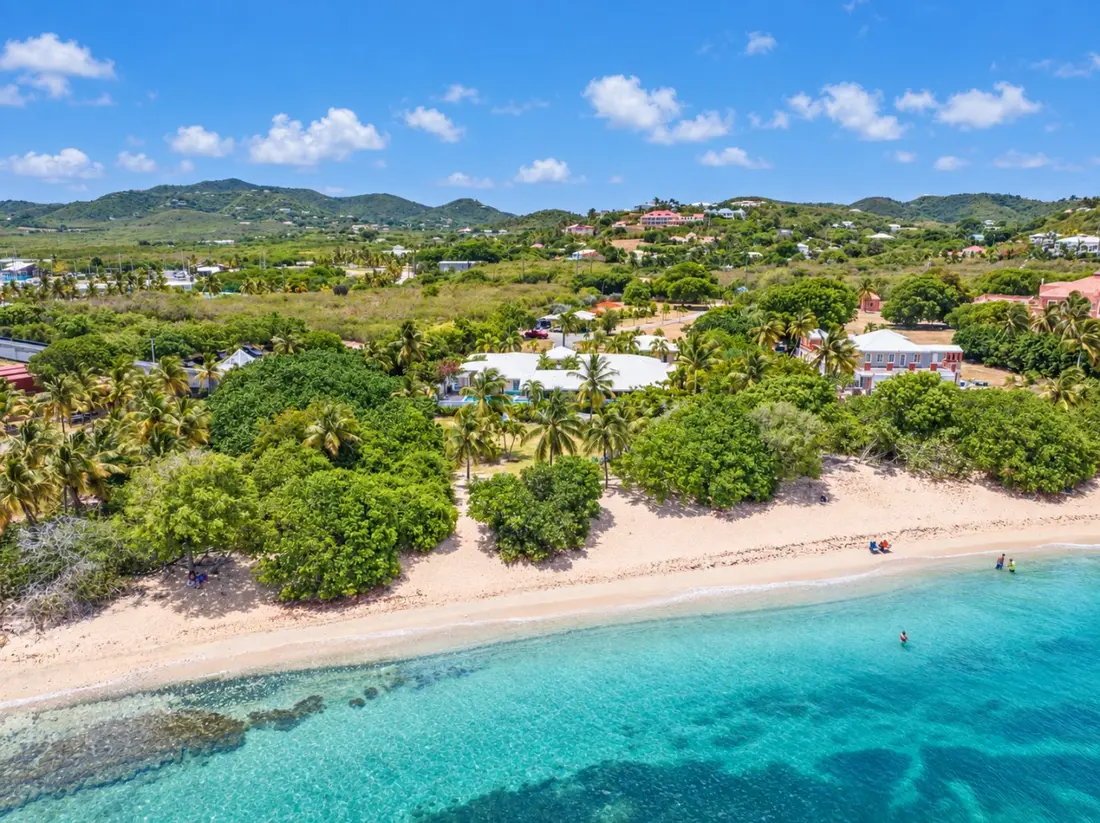

St. Croix from Washington, D.C.
No nonstop yet; connect through Charlotte (daily from December 17, 2026), Miami or Atlanta, or take United's Saturday Newark nonstop from October 31, 2026.
Washington gives you three airports and, through them, three easy roads to St. Croix. January in the District averages about 43°F, milder than New England but still coat weather with short days. St. Croix is one connection from any of them and, being U.S. territory, needs no passport; your dollars and your phone plan work as they would in Maryland or Virginia. A morning out of D.C. can have you swimming in 79°F water by mid-afternoon.
The fastest way from Washington, D.C.
No D.C. airport has a nonstop to St. Croix, but with National, Dulles and BWI to choose from, the metro has an unusually wide spread of connections. The quick, reliable path is one change of planes: on American at Charlotte (CLT) or Miami (MIA), or on Delta at Atlanta (ATL). Each of those hubs sends a nonstop to STX, roughly three hours out of Miami and nearer four out of Charlotte or Atlanta. Take an early departure from whichever airport fits, hold the connection to about 90 minutes, and you land on the island that afternoon. The local airport matters less than the hub you pick, since all three feed these routes; Miami has the shortest last leg and Charlotte usually the most departure times.
Put together, a clean D.C. one-stop runs 9 to 11 hours door to door: the airport, the first leg, the connection, the flight to the island, and the drive from Rohlsen, which takes 15 to 20 minutes to reach Christiansted and 30 to 40 to reach the East End homes. An 8 a.m. takeoff puts you at the villa by mid-to-late afternoon. That works because the island never moves its clocks, which leaves it an hour ahead of Washington from about November through March, so a morning start still leaves you an evening on the island. United flyers have a route of their own: Dulles (IAD) is a United hub with flights to Newark (EWR), where a once-a-week Saturday nonstop to St. Croix runs from October 31, 2026, making the trip a short hop plus one 4½-hour flight.
For the trip home, Rohlsen's small terminal rarely needs more than 90 minutes, and the screening line is quick. You lose an hour flying back into Eastern time, so a late-morning island departure reaches DCA, Dulles or BWI by evening. Give the homeward connection at Miami, Charlotte or Atlanta real slack rather than the minimum the airline allows; a late flight off the island is the usual reason people miss the last flight north. If you want villa dates and flights that fit together, our team lines them up every winter.

Every route from Washington, D.C.
| Option | How it works | Days | Door to door |
|---|---|---|---|
| Via Charlotte — American | American links DCA, IAD and BWI to Charlotte, where the St. Croix flight takes about 3¾ hours; more of them run in winter. | daily, year-round | about 9–11h door-to-door |
| Via Miami — American | From DCA, IAD or BWI to Miami on American, then about three hours nonstop to STX, the shortest final leg. | daily, year-round | about 9–11h door-to-door |
| Via Atlanta — Delta | Delta's four-hour Atlanta to STX leg starts Saturdays on Nov 14, 2026 and goes daily except Mondays on Dec 19, 2026; connect from DCA. | check the Atlanta leg by date | about 10–12h door-to-door |
| Via Dulles/Newark then nonstop — United | United connects Dulles toward Newark, where a Saturday nonstop to STX runs from Oct 31, 2026. | Saturdays, from Oct 31, 2026 | about 9–11h door-to-door |
Which Washington, D.C. airport to use
Washington's three airports each pull their weight for this trip, so pick by carrier and convenience. National (DCA) is the easiest to reach from the city, right on the Metro, and a strong American and Delta airport, which makes it a fine launch point for one-stops through Charlotte, Miami, or Atlanta; its drawback is that some longer connections are thinner because of its perimeter and slot rules, so schedules can be tighter. American uses Terminal C (the newer concourse) and Delta the older piers, so know your gate. Dulles (IAD) is the United hub, and it is your airport if you want to route through Newark for the Saturday nonstop or simply prefer United; United's gates cluster in the main terminal and the mid-field concourses reached by the underground train, so leave time for that transfer, and note IAD is farther out with a longer drive or Silver Line ride.
Baltimore (BWI) rounds it out, strong on Southwest and often the cheapest of the three, and a reasonable choice if you live north of the city, though its best St. Croix connections still run through the same American and Delta hubs. On parking, BWI is the cheapest for a week, DCA the priciest and tightest, IAD in the middle with big economy lots and shuttles; that gap alone can tip a close decision. TSA PreCheck and CLEAR are at all three, and DCA's lines move fast outside the morning federal rush. Eat before your first leg, since a tight hub connection may not leave time, and all three have decent food and airline clubs airside. The short read: DCA for convenience and American or Delta, IAD for United and the Newark nonstop routing, BWI when it wins on price. Because all three sit within an hour or so of most of the metro, the smart move is to price the same trip across the group and let the fare, the schedule, and your own side of the Beltway decide, rather than defaulting to whichever airport is closest.
What flying in from Washington, D.C. feels like
A Washington travel day has two flights, and the layover and the light set its tone. Leave early on American or Delta, allow about 90 minutes at the hub, and it moves along: a short first leg south, time to eat and stretch, then the final leg as the Atlantic opens up blue under the wing. At Charlotte, Miami or Atlanta the St. Croix gate can be a train ride away or at the far end of a concourse, so a roomy layover keeps that walk relaxed, with time for coffee and the restroom. A 40-minute connection is a bet that the first leg left on time, and in a winter of early-morning delays out of the capital that is a poor bet to make on vacation.
The island's clock does you a favor. It does not change in spring or fall, so in winter St. Croix sits an hour ahead of D.C., and a morning departure from National puts you on Rohlsen's runway around the middle of the afternoon. On the way in, the water shades from deep blue to green over the reef, the north coast slides past, and the plane swings in over the sea toward the runway. The arrival routine is short: bags come quickly in the small open-air terminal, the car counters are a few steps off, and there is nothing to clear. The drive from Kingshill climbs through green hills and old sugar-mill country until the sea spreads out ahead, and after a two-flight day from the capital that first open view of the water is where the trip really starts. At the villa, bags down, trade wind on your face, the gray Beltway morning you left feels a season away.

Your travel day from Washington, D.C., hour by hour
One realistic Washington day: Delta through Atlanta out of Reagan National. Times are local; D.C. sits an hour behind the island in winter, so an early start leaves daylight to spare.
- 6:15 a.m. ET — Metro Blue or Yellow Line to Reagan National.
- 6:50 a.m. ET — Drop the bag with Delta at DCA.
- 7:20 a.m. ET — PreCheck moves fast ahead of the federal rush.
- 8:10 a.m. ET — DCA to Atlanta, about two hours.
- 10:10 a.m. ET — Plane Train to the St. Croix gate; lunch in the concourse.
- 11:30 a.m. ET — Atlanta to St. Croix, roughly four hours nonstop.
- ~4:30 p.m. AST — On the ground at Rohlsen, keys to the rental car in hand.
- 5:15 p.m. AST — Groceries done and settled at the villa while the sun is still up.
St. Croix in January versus Washington, D.C.
January in Washington averages about 43°F, milder than points north but still a season of overcoats, early darkness by five o'clock, and now and then an ice day that ties up the Beltway. Daylight runs under ten hours, the monuments look their grayest, and outdoor plans mostly wait for spring. St. Croix that week brings highs near 83°F, a sea near 79°F and close to eleven hours of sunlight, with evenings that need nothing more than a shirt.
Set side by side, that is a swing of about forty degrees and more than an extra hour of light every day. Gray commutes give way to a morning swim, a long afternoon outdoors and dinner outside while it is still light, and long swims are easy in water that warm, unlike the quick in-and-out a mid-Atlantic beach demands even in summer. The breeze keeps the heat light. January is also the island's steadiest stretch, bright and trade-blown with the odd quick shower, so a week can be planned around the beach without betting on the forecast the way a spring trip can feel, and it is all on U.S. soil.
When to fly from Washington, D.C., and when to buy
Since every D.C. itinerary connects, the fare mostly tracks the season and how far ahead you buy, not one scarce nonstop. The holiday weeks around Christmas and New Year run highest, the long weekends for MLK and Presidents' Day stay high, and prices ease in early December, ahead of the holiday rush, and in the late-April-to-May shoulder, when the crowds thin out. Book winter a couple of months ahead; last-minute peak-week seats are the pricey ones. Three airports are a real advantage here: price DCA, IAD and BWI for the same trip and take the better fare or schedule, and BWI often undercuts the other two.
If you are routing through Newark for United's Saturday nonstop, treat that leg as scarce, because it flies once a week and the holiday Saturdays sell first. For Charlotte, Miami or Atlanta connections, midweek usually beats the weekend, and shifting the trip a day or two can find a better price. Fare alerts on all three airports for the same week are the surest way to see a drop.
One tactical note: with a tight connection, carry your bag on, so it cannot be left behind at the hub. Real prices move all the time, so these are the patterns rather than fixed fares.
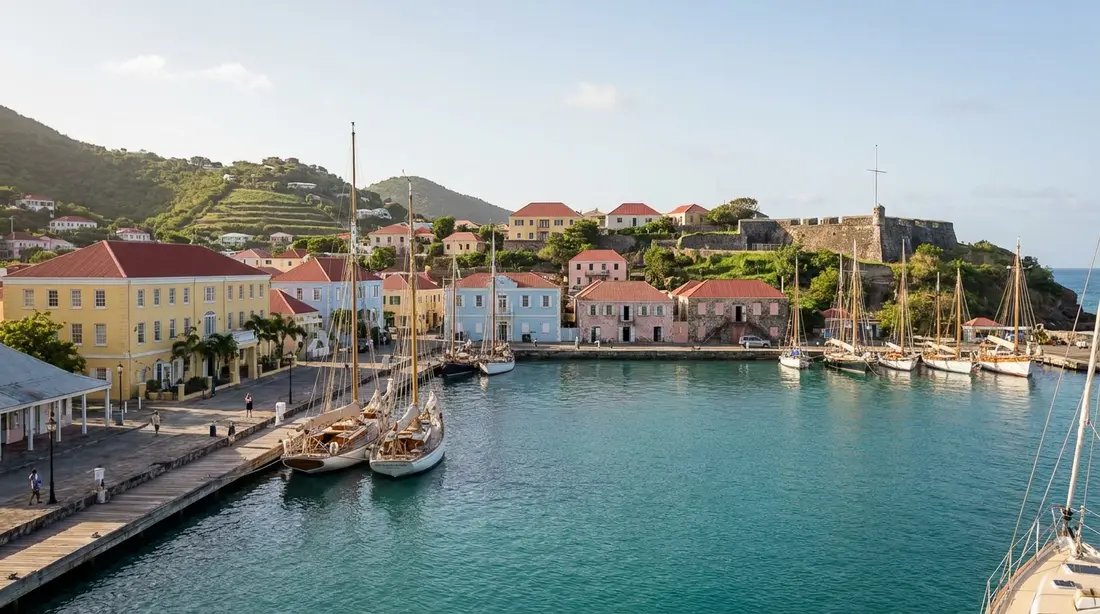
Washington, D.C. connections and stopovers
From Washington you can keep the connection short or make it a stop of its own. San Juan is the easy one, because the hop from there lasts about 50 minutes, with several flights daily. Book an evening in the old city, walk the El Morro fort walls, eat in a courtyard, and take the first flight across the next day. A Miami routing leaves room for an afternoon on South Beach, and a long Atlanta or Charlotte layover is time enough for a sit-down meal if you plan it.
On a one-day trip, give the hub 90 minutes to two hours so a late first leg cannot sink the second, since anything under an hour is risky in winter, especially out of DCA during the busy morning bank. Through San Juan, a missed hop rarely means a lost day. Three home airports also mean more schedule choices, so you can usually find a departure that sets up a comfortable connection in the first place. That spread of options is Washington's real edge: if the best connection that day leaves from Dulles or BWI rather than National, the extra drive is often worth it to avoid a nerve-testing 40-minute change.
Questions about flying from Washington, D.C.
Is there a nonstop from Washington, D.C. to St. Croix?
Will I need a passport from D.C.?
How many hours should we plan on?
DCA, IAD or BWI: which is best for St. Croix?
Which weeks are cheapest to fly from D.C.?
Is San Juan worth it as a connection from D.C.?
Is flying from D.C. with car seats and kids easy?
From D.C., is Miami or San Juan the quicker connection?
Where is parking cheapest for a week?
Can I take the Metro to the airport?
Can I fly United from Dulles?
In this guide
Washington, D.C. at a glance
- One stop
- Best via Miami, Charlotte, Atlanta or Newark
- Airports: DCA (National) — connect via CLT/MIA/ATL, IAD (Dulles) — United hub, route via EWR nonstop (Sat), BWI — often best fare, connect via hubs
- Destination: STX, Henry E. Rohlsen