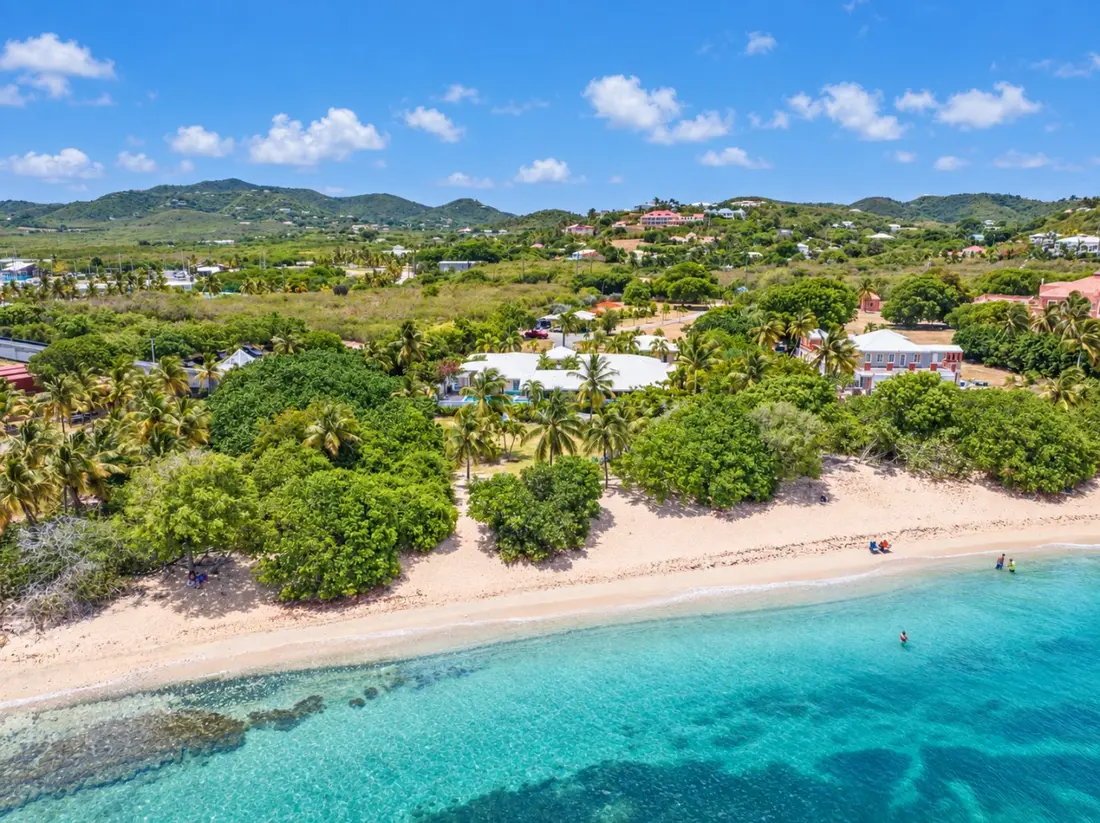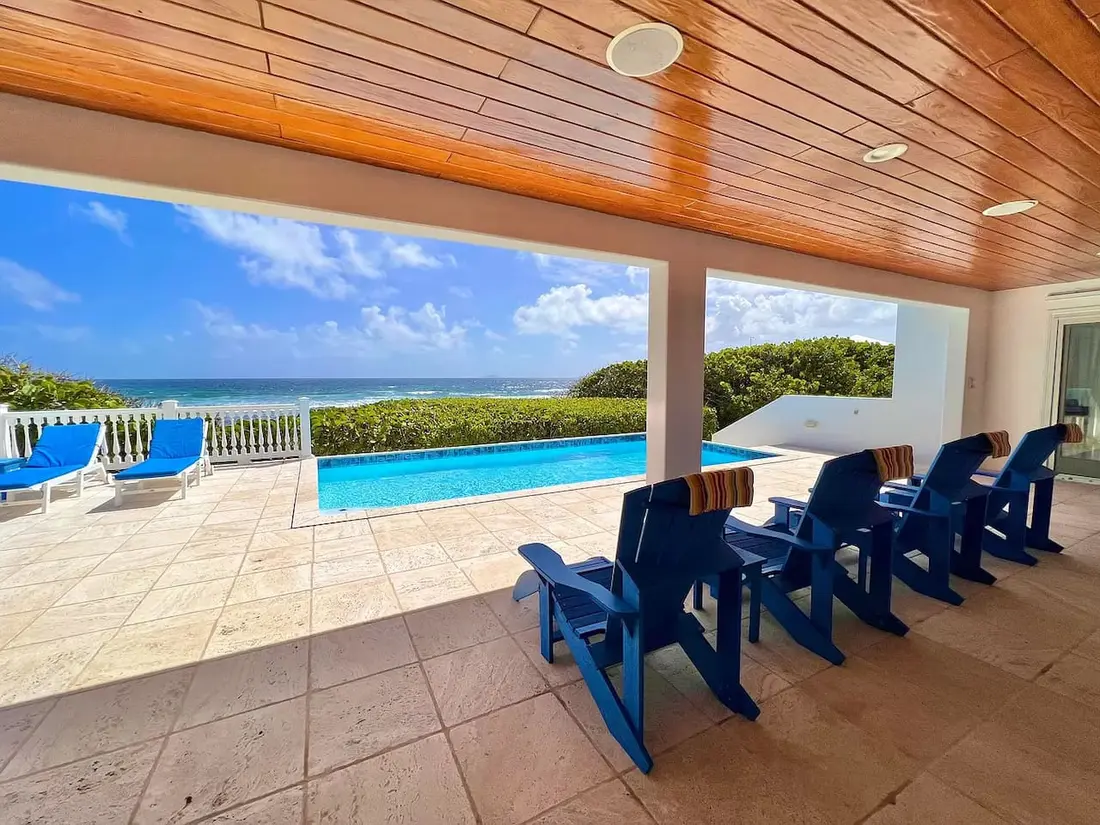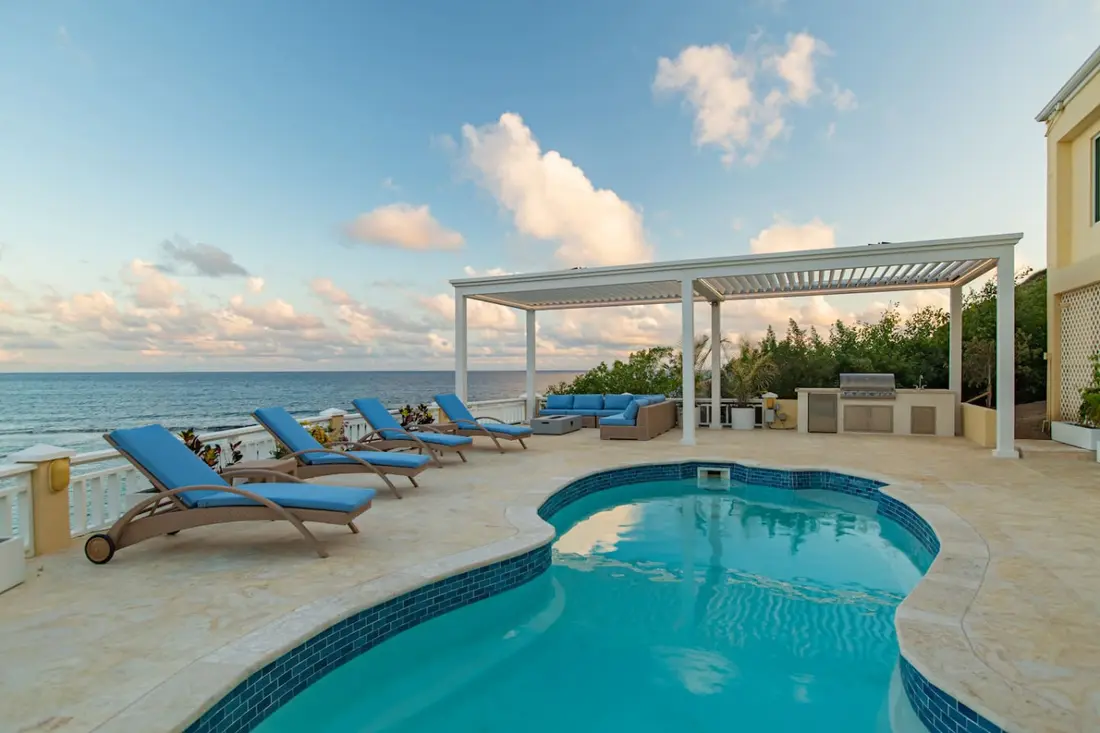

St. Croix from Minneapolis–St. Paul
Connect via Atlanta (Delta, daily except Mondays from December 19, 2026), Chicago (winter Saturdays from December 5) or Charlotte.
When the Twin Cities settle into a January that averages around 24°F, St. Croix is running near 83°F with 79°F water, and getting there is easier than the distance suggests. MSP has no nonstop, but a single change of planes gets Twin Cities travelers there the same day, and because St. Croix is American soil, the whole trip needs no passport, cash and cards work as they do in Minneapolis, and your phone plan works from the moment you land. You leave a subzero wind chill at MSP and land where the evening air is still warm.
The fastest way from Minneapolis–St. Paul
With no nonstop out of MSP, the quick, realistic route is one connection, and for most Twin Cities travelers that connection is Delta's in Atlanta. MSP is a Delta stronghold with frequent daily service to Atlanta (ATL), and from Atlanta a St. Croix nonstop of about four hours runs daily except Mondays starting December 19, 2026. Frequency is why Atlanta wins: Delta flies MSP to ATL many times a day, so you can shape the connection to suit you, and later departures are there if something slips. The one thing to plan around is that ATL-STX does not fly on Mondays in the early winter schedule, so avoid a Monday arrival on that path.
Two other one-stops are worth knowing. From December 5, 2026, you can connect in Chicago (ORD) to American's winter Saturday nonstop — a good fit if your week is Saturday-to-Saturday and you would rather change planes in the Midwest than fly south to Atlanta first. American through Charlotte (CLT) is the other clean option, with its St. Croix flight going daily from December 17, 2026. All three are one stop and land you the same day; the deciding factors are your travel day, which airline you hold status or a companion fare with, and how the layover times line up.
Plan the full day. Pair the Atlanta flights well and the day runs ten to eleven hours from a Twin Cities front door to the villa, counting the drive to MSP, check-in and security, the leg south, a breathing-room layover, the four-hour flight to St. Croix and up to forty minutes by car from Rohlsen. Deep-winter mornings add a wildcard in the form of de-icing, which is the single most common reason a comfortable Twin Cities connection becomes a tight one, so favor a morning departure with margin rather than the last flight that technically connects.
Plan the return before you book it. Flying home you gain those two hours back, so leaving the island at mid-morning with a change in Atlanta puts you into MSP in the evening. It is a long day; U.S. customs screens you at Rohlsen before the first flight, so the Atlanta change is purely domestic. Build slack into that homeward Atlanta change, because the last flight to Minneapolis is not one to miss over a small island delay, and winter storms can slow MSP arrivals as well.

Every route from Minneapolis–St. Paul
| Option | How it works | Days | Door to door |
|---|---|---|---|
| Via Atlanta — Delta | Many Delta flights a day from MSP to Atlanta, then about four hours to St. Croix; Mondays aside, that leg is daily from Dec 19, 2026. | daily exc. Mon from Dec 19, 2026 | about 10–11h door-to-door |
| Via Chicago — American | MSP to O'Hare, then the winter Saturday nonstop ORD to STX (about 4¾ hours); a Saturday-only option. | Saturdays from Dec 5, 2026 | about 10–12h door-to-door |
| Via Charlotte — American | MSP to Charlotte on American, then roughly 3¾ hours to the island; daily from Dec 17, 2026. | daily from Dec 17, 2026 | about 11–12h door-to-door |
Which Minneapolis–St. Paul airport to use
Minneapolis-St. Paul (MSP) is a single, well-run airport that happens to be one of Delta's core hubs, and that shapes every St. Croix itinerary out of the Twin Cities. MSP has no island nonstop; its strength is how often it flies to the connecting hubs: many Delta departures a day to Atlanta, plus American service toward Charlotte and Chicago. That density is what makes a one-stop day dependable rather than nerve-wracking — if a flight slips, there is usually another behind it. Most St. Croix travelers will use Terminal 1 (Lindbergh), Delta's home, with its C, F, and G concourses; the Atlanta-bound flight that feeds your island leg typically leaves from the C or F concourse, but confirm on the monitors, since gates shift.
The ground logistics are easy here. The light-rail Blue Line connects Terminal 1 and the smaller Terminal 2 (Humphrey) to downtown Minneapolis and the Mall of America, a simple way to reach the airport without parking a car for a week. For drivers, the ramps attached to Terminal 1 are the most convenient but priciest for a long trip; the value ramps and nearby off-site lots cost less over a vacation. Terminal 1 has plenty of PreCheck and Clear lanes, and they earn their keep on the early-morning push, when it feels as if all of Minnesota is flying out at once. Beyond security, the C and F concourses offer good sit-down restaurants, coffee counters and quick food, and Delta runs Sky Clubs there for members. Eat properly and fill a water bottle before boarding, since the day is long and the island leg offers little. In deep winter, build in extra time for de-icing delays on your outbound leg; it is the most common reason a tight connection gets tighter, and a delay that would be trivial in July can quietly erase a 45-minute gap in January.
What flying in from Minneapolis–St. Paul feels like
The Minneapolis travel day is a study in contrast, and a morning start makes it a good one. You leave MSP in the cold and dark, put in a first leg to Atlanta or Charlotte, take a layover long enough to stretch and eat, then fly the last stretch south into a completely different climate. The connection is where the day is won or lost. Seventy-five to ninety minutes in Atlanta buys a walk, a real lunch and a calm response to any gate change; a tight 40-minute gate-to-gate dash means checking the monitors the second you land, hoping your inbound and outbound are on the same concourse rather than opposite ends of the airport train. Give yourself the buffer, especially when a de-icing wait at MSP can quietly erase it.
Then the good part. On the last leg the plane comes down over a wide stretch of sea, and in clear weather the island's reef line and its light-green shallows appear well ahead of the airport; whether your side of the cabin sees them depends on the wind and the runway, so count it as a bonus. At 10,002 feet, Rohlsen's runway handles jets up to a 747, and the landing feels unhurried. Then comes the payoff for the whole day. The air at the aircraft door is thick, warm and smells of the sea, the terminal is small and quiet, and with no international border crossed there is no passport desk to stand in. Collect the bags, walk to the rental counters, and inside thirty minutes the windows are down on the road to Christiansted. The road out of Kingshill rolls past green hills and glimpses of water, and a grocery stop at Plaza Extra covers dinner for the first night. By the time you reach the house the light is going soft and the trade winds are moving through the palms. Twelve hours earlier you were scraping frost off the car and squinting through a salted windshield; now the cold is an abstraction, and the only real decision left is which beach comes first in the morning.
Your travel day from Minneapolis–St. Paul, hour by hour
Minneapolis reaches St. Croix by connection, most cleanly on Delta through Atlanta. Here is how a well-timed weekday runs. In winter the island's clock runs two hours ahead of Central time, so you lose a chunk of the day on paper as you go.
- 5:45 a.m. CST — Leave for MSP in the dark and the cold. In deep winter you allow for a slow, salted drive and a possible de-icing wait later.
- 6:30 a.m. — Bags checked and through security at Terminal 1 (Lindbergh), where Delta lives; the PreCheck lanes open early and pay off.
- 7:15 a.m. — Coffee on the C or F concourse; last mainland breakfast before the islands.
- 7:50 a.m. — Board MSP to Atlanta. If the outbound needs de-icing, this is where a tight day gets tight.
- 11:10 a.m. EST — Land in Atlanta with a roomy layover and time for a concourse lunch.
- 12:30 p.m. EST — Board the Atlanta to STX nonstop, about four hours over open water.
- ~4:35 p.m. AST — Touchdown at Rohlsen after coming in over the reef; island time is two hours past Minneapolis time.
- 5:15 p.m. AST — Pick up the car, shop quickly for groceries, and reach the house in the last daylight.
St. Croix in January versus Minneapolis–St. Paul
Minneapolis-St. Paul in January averages around 24°F for the daytime high, and the real feel is colder once wind chill is in play; this is the deep middle of a long northern winter, the stretch where subzero mornings stop being news, the sidewalks stay icy for weeks, and the sun sets before 5:00. It is the season you organize your life around: block heaters, layered kids, and checking the forecast before any drive. That week on St. Croix, daytime temperatures hit about 83°F, the sea holds near 79°F, and the sun stays up well past 5:30, for close to eleven hours of light. It is one of the widest weather gaps you can cross in a single travel day anywhere in the country.
The payoff is a full, reliable warm-weather week. Most January weeks there are warm and windy in the pleasant way: the trades keep the heat comfortable, showers pass and the pavement dries within the hour, and nobody hesitates before swimming in water that warm. Since January is the island's dry high season, Minnesota cold is swapped for sun, calm swimming and dinners outdoors, not for storms. No snow pants, no shoveling, no checking the wind chill before the kids go out; from mid-morning the thermometer sits in the low 80s and every hour of daylight is usable. For a Twin Cities traveler, that is the entire point: a hard reset from the coldest, darkest part of the year, reachable in a single day.
When to fly from Minneapolis–St. Paul, and when to buy
Because Minneapolis reaches St. Croix by connection rather than a single scarce nonstop, you generally have more routing flexibility here than a nonstop city does — but the final legs into St. Croix are still the limiting factor. The Atlanta, Charlotte and Chicago flights to the island are few each day, and they are the first seats gone over the December holidays and during the February and March busy weeks. Reserve the busy weeks early and track the island leg's seat availability, not just the fare out of MSP.
Read the calendar by month. Christmas to New Year's, two weeks, is the top of the market; the mid-January MLK holiday and February's Presidents' week follow, and Minnesota school breaks make them sell early. Cheaper weeks come in early December, ahead of holiday travel, and again from late April through May, while St. Croix stays warm and dry and fewer mainlanders fly. If your week is Saturday-to-Saturday, price the Chicago option against the daily Atlanta path, because the winter Saturday nonstop out of ORD can be the shortest overall day. Once your dates are fixed, set a fare alert and judge the whole journey, not just the MSP leg.
Two tactical notes. If any connection is tight, travel with a bag that fits the overhead bin so a gate-check cannot separate you from it; check luggage only with long layovers. As for the view coming in, the runway heading decides which side faces the reef, so paying for a particular seat is wasted money.

Minneapolis–St. Paul connections and stopovers
With no nonstop, the connection is the whole game, so treat the layover as something to design rather than survive. The realistic minimum at a big hub like Atlanta is about 60 minutes, but 75 to 90 is far more comfortable, and in deep winter you want that cushion because a de-icing delay on your MSP outbound can eat a tight gap before you have even left home. Delta's frequency at Atlanta is your friend here: if a flight slips, there are usually later Atlanta departures to catch, which is exactly why a 45-minute connection that looks efficient on the schedule can cost you the whole afternoon.
If you would rather not gamble on a same-day connection at all, Atlanta, Miami, and San Juan all make good deliberate stopovers. A night in Atlanta on the way down breaks the trip cleanly and lets you take a rested morning flight to the island. Closer to the island, San Juan (SJU) appeals most: as the region's hub it sends many short flights a day to St. Croix, each about fifty minutes, and a night there means an easy morning arrival and a whole first day in the sun. Each of these costs a day and takes the pressure off; from a winter-weather city where the outbound can be delayed by snow, that planned buffer is often worth more than the day it costs.
Questions about flying from Minneapolis–St. Paul
Is there a nonstop from Minneapolis to St. Croix?
How should I fly from MSP to St. Croix?
Is a passport needed from the Twin Cities?
How long does the trip take?
Will winter weather in Minneapolis mess up my connection?
When should Minnesotans go?
From MSP, which is quicker: Atlanta or Charlotte?
How does the trip work with kids and car seats?
In this guide
Minneapolis–St. Paul at a glance
- One stop
- Best via Miami, Charlotte, Atlanta or Newark
- Airports: MSP (Minneapolis-St. Paul) — connect via Atlanta (best), Charlotte, or Chicago, No nonstop from the Twin Cities — all routings are one stop, Destination: STX, Henry E. Rohlsen — U.S. port of entry, no passport
- Destination: STX, Henry E. Rohlsen